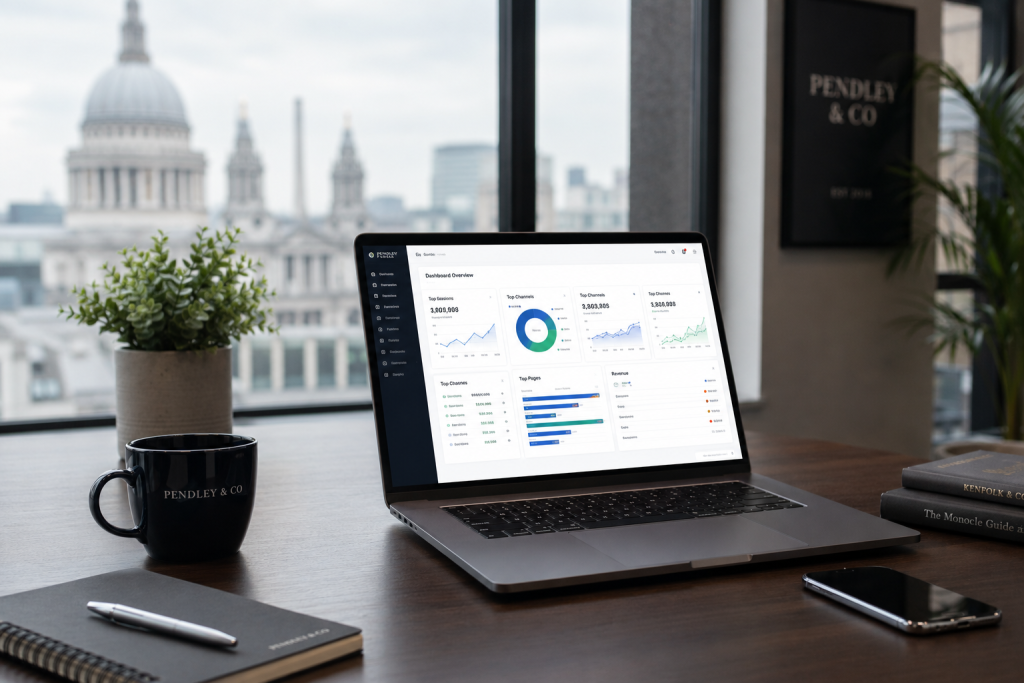
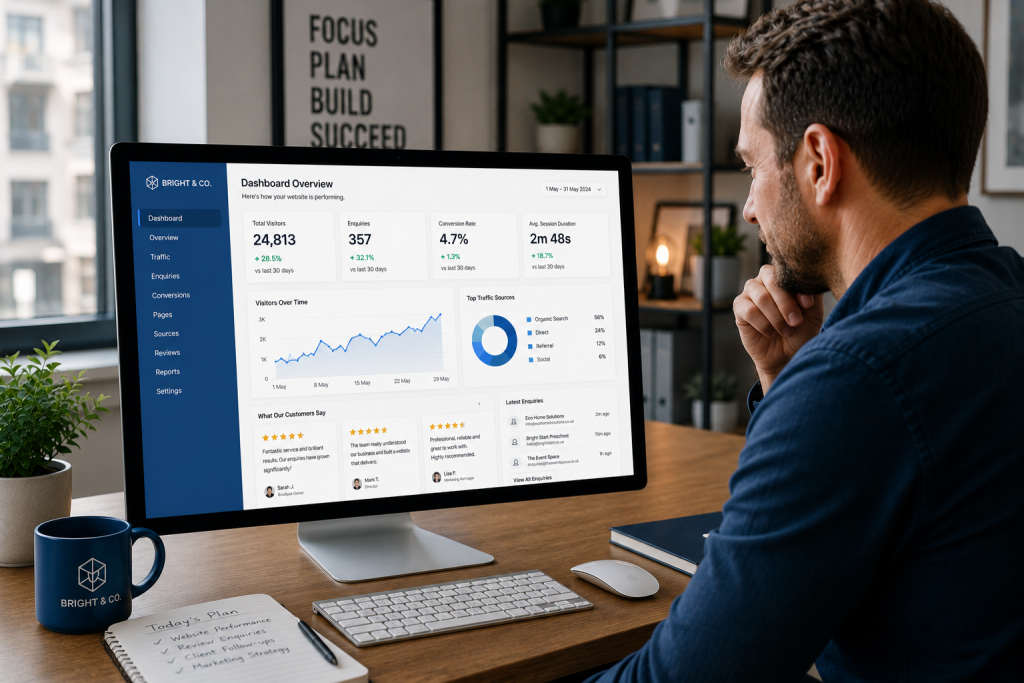
Improving your online business in 2026 requires more than simply having a website. The businesses seeing the strongest growth are combining fast websites, exceptional user experience, AI-friendly content, local SEO, conversion optimisation, and trust-building strategies. When these elements work together, businesses generate more traffic, more leads, and more revenue.
Whether you run a local service company, an e-commerce store, a trades business, or a growing SME, the digital landscape continues to evolve. Customers are researching more carefully, AI-powered search tools are changing how information is discovered, and expectations for online experiences are higher than ever.
This guide explores the most effective tips to improve your online business and remain competitive in 2026.

Table of Contents
Why Online Business Growth Matters in 2026
Build a Modern High-Performing Website
Prioritise Mobile User Experience
Improve Website Speed and Performance
Strengthen Your Local SEO Presence
Create Helpful Content That Solves Problems
Optimise for AI Search Engines
Increase Website Conversion Rates
Build Trust and Credibility
Use Analytics to Make Better Decisions
Automate Repetitive Business Processes
Why These Strategies Matter Together
Why Online Business Growth Matters in 2026
Consumers are spending more time researching businesses online before making purchasing decisions. Search engines, AI assistants, review platforms, and social media channels all influence purchasing behaviour.
According to Google, customers often interact with multiple touchpoints before contacting a business. Businesses with strong digital experiences are therefore more likely to attract and convert potential customers.
A successful online business today needs:
- Strong visibility
- Excellent user experience
- Fast website performance
- Trust signals
- Clear conversion paths
- Valuable content
Online Business that neglect these areas often lose opportunities to competitors with stronger digital foundations.
Build a Modern High-Performing Website
Your website remains the centre of your digital presence.
Every advertisement, social media post, SEO campaign, and email marketing effort ultimately drives users back to your website. If the website fails to deliver a positive experience, potential customers often leave without taking action.
A modern website should include:
- Responsive design
- Clear navigation
- Fast load times
- Accessible content
- Strong security
- Conversion-focused layouts
Many UK businesses benefit from investing in professional conversion-focused web design through.

Signs Your Website Needs Improvement
- High bounce rates
- Poor mobile performance
- Slow loading pages
- Outdated design
- Low enquiry rates
- Declining rankings
Website Comparison
| Outdated Website | Modern Website |
|---|---|
| Slow loading | Fast loading |
| Difficult navigation | Clear navigation |
| Poor mobile experience | Mobile-first design |
| Low conversions | High conversion potential |
| Weak SEO foundations | SEO-friendly structure |
| Outdated branding | Modern credibility |
Prioritise Mobile User Experience
Mobile devices generate the majority of website traffic across many industries.
Customers expect websites to work flawlessly on smartphones and tablets. A poor mobile experience can immediately reduce engagement and conversions.
Key mobile optimisation areas include:
- Readable text
- Fast loading pages
- Responsive layouts
- Touch-friendly navigation
- Mobile-friendly forms
Mobile Experience Checklist
- Responsive website design
- Compressed images
- Click-to-call functionality
- Simplified navigation
- Easy-to-complete contact forms
- Fast page loading
Online Business that focus on user experience often see stronger engagement, lower bounce rates, and higher conversion rates.
A professional UX review using a structured process can help identify usability barriers that affect conversions.

Improve Website Speed and Performance
Website speed directly affects rankings, user satisfaction, and conversion rates.
Research from Google consistently demonstrates that users are less likely to remain on slow-loading websites.
Common causes of slow websites include:
- Large images
- Poor hosting
- Excessive plugins
- Unoptimised code
- Lack of caching
How to Improve Website Speed
- Compress images before uploading.
- Use high-quality hosting.
- Remove unnecessary plugins.
- Enable browser caching.
- Minify CSS and JavaScript.
- Implement a content delivery network.
Businesses investing in custom WordPress development through often achieve significant performance improvements.
Performance Impact Comparison
| Slow Website | Fast Website |
| Higher bounce rate | Lower bounce rate |
| Poor user experience | Better user experience |
| Lower rankings | Stronger rankings |
| Fewer conversions | More conversions |
| Reduced engagement | Higher engagement |
Google PageSpeed Insights provides valuable recommendations for performance improvements.

Strengthen Your Local SEO Presence
For UK Online Business, local SEO remains one of the highest-return marketing investments.
When customers search for local services, businesses appearing prominently in search results are more likely to receive enquiries.
Examples include:
- Roofer in Manchester
- Accountant in Leeds
- Electrician in Birmingham
- Web designer in Sheffield
Improve Your Google Business Profile
Ensure your profile includes:
- Accurate contact information
- Business categories
- Opening hours
- High-quality images
- Customer reviews
Maintain Consistent Business Information
Your business name, address, and phone number should remain consistent across:
- Website
- Directories
- Social media profiles
- Review platforms
Encourage Reviews
Positive reviews influence:
- Search visibility
- Customer trust
- Conversion rates
Many Online Business combine local SEO with professional website redesign services through to maximise performance.
Create Helpful Content That Solves Problems
Content remains one of the most effective ways to attract qualified visitors.
Rather than publishing content purely for search engines, focus on helping customers solve real problems.
Useful content types include:
- Blog posts
- Guides
- Case studies
- FAQs
- Tutorials
- Industry insights

Content Ideas by Industry
| Industry | Content Examples |
| Plumbers | Common plumbing issues |
| Electricians | Electrical safety guides |
| Accountants | Tax planning advice |
| Retailers | Buying guides |
| Web Design Agencies | Website improvement tips |
Helpful content supports:
- SEO visibility
- Brand authority
- Customer trust
- Lead generation
Businesses that consistently publish useful content often achieve stronger long-term growth than those relying solely on paid advertising.
Optimise for AI Search Engines
AI-powered search platforms are changing how users discover information.
Tools such as ChatGPT Search, Google AI Overviews, Gemini, Perplexity, and Bing Copilot increasingly provide direct answers rather than simply displaying traditional search results.
To improve visibility in AI-powered search experiences, businesses should focus on creating content that is:
- Clear and easy to understand
- Factually accurate
- Well-structured
- Helpful and comprehensive
- Supported by credible sources
How AI Search Engines Evaluate Content
AI systems typically favour content that demonstrates:
- Expertise
- Accuracy
- Relevance
- Trustworthiness
- Clear structure
AI-Friendly Content Best Practices
Use:
- Descriptive headings
- Direct answers
- Bullet points
- Numbered lists
- FAQ sections
- Clear explanations
Avoid:
- Keyword stuffing
- Thin content
- Misleading claims
- Overly promotional language
Online Business that create genuinely useful content are more likely to be cited or referenced by AI-generated search results.
Increase Website Conversion Rates
Traffic alone does not grow a business.
The most successful companies focus on converting visitors into leads, enquiries, and customers.
Conversion optimisation involves improving the percentage of visitors who take meaningful actions.
Common Website Conversion Goals
- Contact form submissions
- Phone calls
- Quote requests
- Online purchases
- Newsletter signups
- Consultation bookings
Simple Conversion Improvements
Improve Call-to-Action Placement
Visitors should immediately understand what action to take.
Examples include:
- Request a quote
- Book a consultation
- Contact our team
- Get pricing information
Simplify Forms
Long forms often reduce conversions.
Ask only for essential information.
Improve Trust Signals
Include:
- Reviews
- Testimonials
- Certifications
- Case studies
- Business credentials
Conversion Optimisation Comparison
| Low-Converting Website | High-Converting Website |
|---|---|
| Confusing navigation | Clear navigation |
| Weak calls to action | Strong calls to action |
| Little social proof | Strong trust signals |
| Slow loading pages | Fast performance |
| Poor mobile usability | Mobile-first design |
| Limited contact options | Multiple contact methods |
At Web Firm, conversion-focused development is often one of the highest-impact improvements businesses can make to increase ROI from existing traffic.
Build Trust and Credibility
Trust influences almost every online purchasing decision.
Visitors frequently evaluate whether a business appears credible before making contact.
What Builds Trust Online?
Professional Website Design
A modern website creates a strong first impression.
Poor design can immediately reduce confidence.
Customer Reviews
Positive reviews provide independent validation.
Google reviews remain especially important for local businesses.
Transparent business Information
Clearly display:
- Contact details
- Service information
- Pricing guidance where appropriate
- Company information
Secure Website Infrastructure
HTTPS security certificates help reassure visitors that their information is protected.
Trust Signals That Matter
- Google Reviews
- Case Studies
- Client Testimonials
- Industry Certifications
- Awards
- Published Expertise
- Secure Website Technology
Online business that demonstrate transparency and expertise are more likely to earn customer confidence.
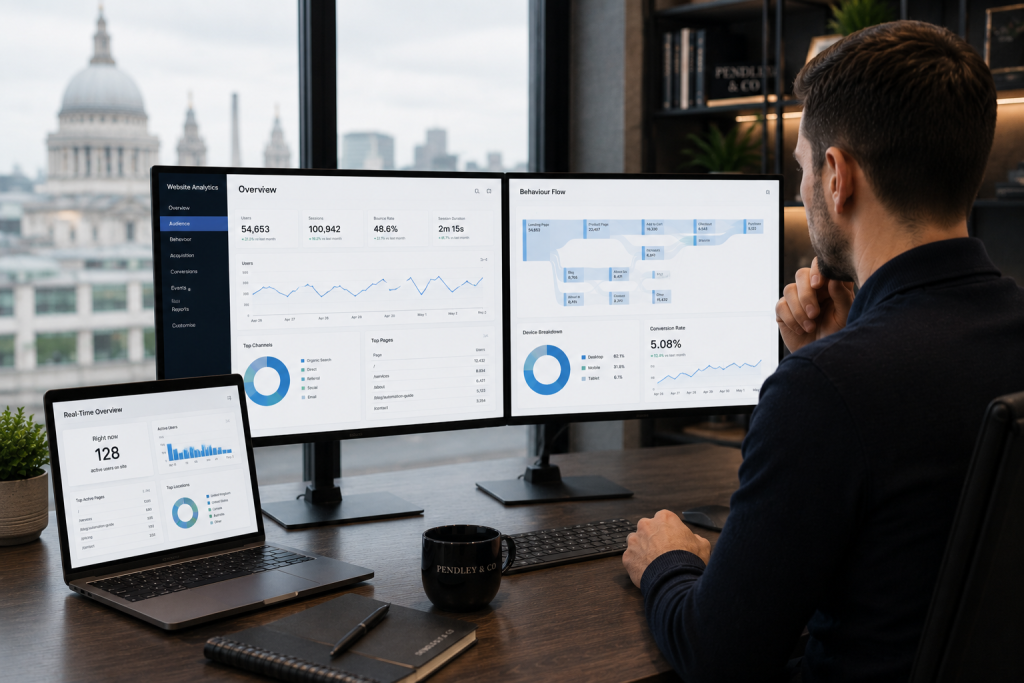
Use Analytics to Make Better Decisions
Many businesses make marketing decisions based on assumptions rather than data.
Analytics helps identify what is working and where improvements are needed.
Key Metrics to Monitor
Website Traffic
Understand:
- Where visitors come from
- Which pages perform best
- How users behave
Conversion Rates
Measure:
- Leads generated
- Sales completed
- Contact submissions
User Behaviour
Identify:
- Popular pages
- Exit points
- Navigation patterns
Important Analytics Tools
Benefits of Data-Driven Decisions
- Better marketing ROI
- Improved customer experiences
- More effective content
- Higher conversion rates
Regular reporting helps businesses allocate resources more effectively.
Automate Repetitive Business Processes
Automation allows businesses to save time while improving consistency.
Many routine tasks can now be streamlined using modern digital tools.
Processes Worth Automating
- Lead nurturing
- Appointment booking
- Email follow-ups
- Customer onboarding
- Review requests
- Reporting
Benefits of Automation
- Reduced manual workload
- Faster response times
- Improved customer experience
- Greater operational efficiency
Examples of Useful Automation Tools
| Function | Example Tool Type |
| Email Marketing | Automation Platforms |
| CRM Management | Customer Relationship Systems |
| Appointment Booking | Scheduling Software |
| Customer Support | AI Chat Solutions |
| Reporting | Analytics Dashboards |
Automation should support human interactions rather than replace them entirely.
Why These Strategies Work Best Together
Many businesses focus on a single growth tactic.
However, the strongest results typically come from combining multiple improvements.
Example Growth Framework
- Build a fast website.
- Improve mobile usability.
- Strengthen local SEO.
- Publish helpful content.
- Optimise for AI search.
- Increase conversion rates.
- Build trust signals.
- Monitor performance.
- Automate repetitive tasks.
When combined, these strategies create a system that attracts, engages, and converts customers more effectively.
Frequently Asked Questions
How can I improve my online business in 2026?
Focus on website performance, local SEO, content marketing, mobile optimisation, conversion optimisation, and trust-building.
What is the most important factor for online business growth?
There is no single factor. Sustainable growth usually comes from combining visibility, user experience, and conversion optimisation.
Does website speed affect SEO?
Yes. Website speed influences user experience and is considered a ranking factor by search engines.
Is local SEO still important in 2026?
Yes. Local SEO remains one of the most effective strategies for service-based and location-focused businesses.
How can AI search affect my business?
AI search engines increasingly recommend businesses and content directly. Creating clear, authoritative, and helpful content improves visibility.
How often should I update my website?
Most businesses should review their website regularly and consider major updates every few years to maintain competitiveness.
Why is mobile optimisation important?
Most users now browse on mobile devices. Poor mobile experiences often lead to lost traffic and conversions.
Should small businesses invest in website redesigns?
If a website is outdated, slow, difficult to use, or underperforming, a redesign can significantly improve leads and conversions.
Businesses that want to grow online in 2026 must focus on more than simply attracting visitors.
Success comes from creating a complete digital experience that combines strong visibility, fast performance, excellent user experience, trustworthy content, and effective conversion pathways.
The most effective tips to improve your online business include building a modern website, improving speed, strengthening local SEO, creating valuable content, optimising for AI search, increasing conversions, and using data to guide decisions.
These strategies help businesses generate more enquiries, improve customer trust, and achieve sustainable growth.
If your current website is holding your business back, now is the ideal time to invest in improvements. Whether you need conversion-focused web design, custom WordPress development, a website redesign, a UX audit, or local SEO support, contact our team through to discuss how Web Firm can help you build a stronger online presence in 2026 and beyond.